-
الدعم عبر الإنترنت
-
اتصال مجاني

معلومات عنا
على مدى 15 عامًا، نمت شركة نانتونغ ريكورد للمعدات الرياضية المحدودة لتصبح موردًا متكاملًا للسلع الرياضية مع قدرات مستقلة في التصميم والبحث والتطوير والإنتاج.
احصل على عرض سعر مجاني
- بيت >
- مدونة >
- مدونة الصناعة >
- How to choose yoga mats for yoga studios: slip resistance, durability, and daily maintenance
How to choose yoga mats for yoga studios: slip resistance, durability, and daily maintenance
-
 مؤلف
- 2,نوفمبر
Choosing a yoga mat for a yoga studio should not be based solely on the first touch. The anti-slip performance, wear resistance, and cleaning effect should be tested on the actual ground used, and the tested thickness and material structure should be confirmed before placing an order. It is best to let the sample go through a complete course: pressing your palm on a dry new mat is far less reliable than practicing for an hour on a real field. At the same time, the staff responsible for cleaning should also be given a trial period. After all, using a good yoga mat at 9am, we still have to catch up with the next batch of students entering the venue.
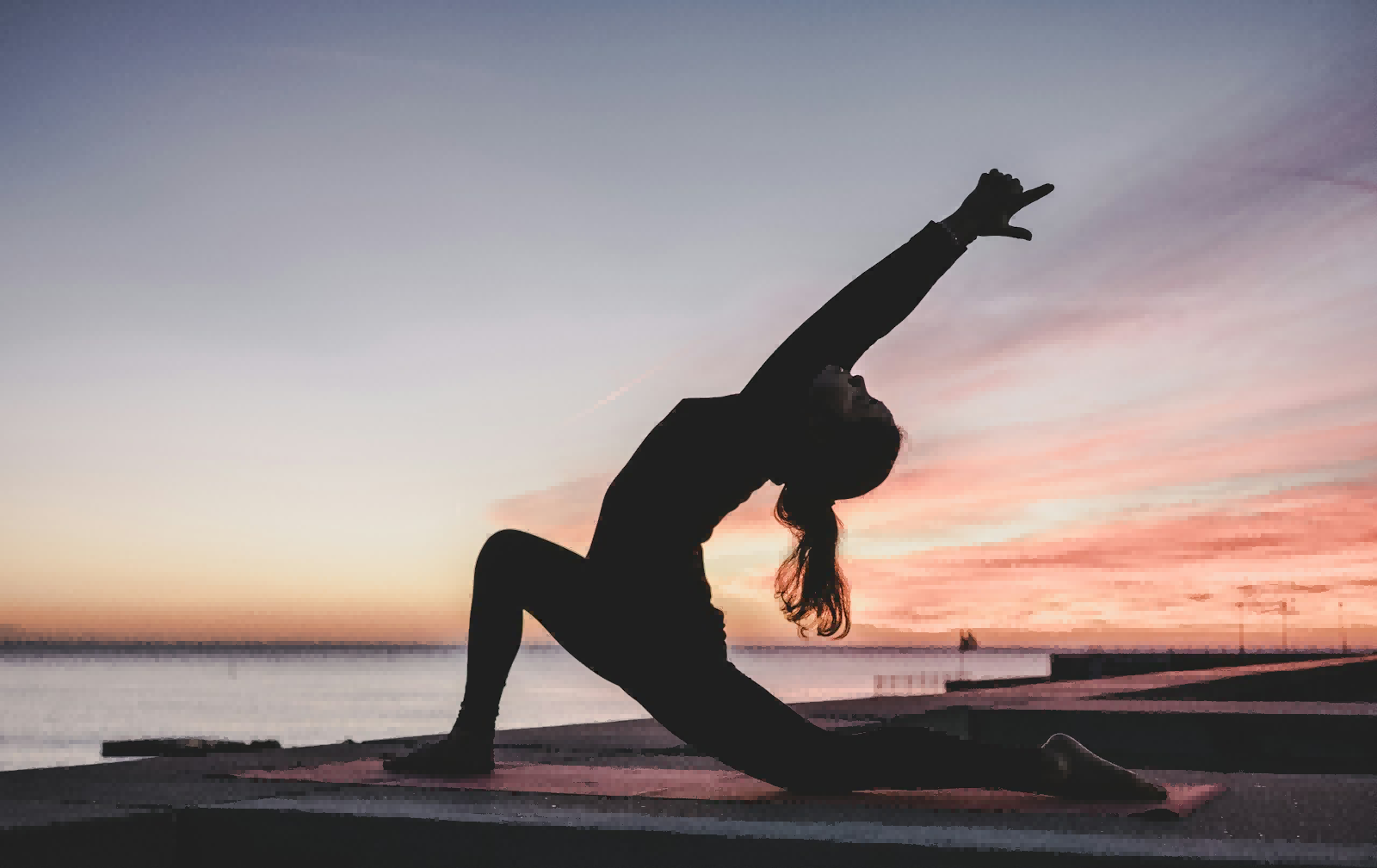
Some people say, ‘this mat slides’; first of all, we need to figure out: are the hands and feet sliding, or is the entire yoga mat?
The front and bottom of the yoga mat have different anti-slip effects. If the entire yoga mat slides on the floor during practice, it indicates that it is necessary to focus on checking the anti-slip performance of the mat bottom; If the yoga mat remains stationary but the practitioner’s hands and feet are prone to slipping, then the anti-slip effect on the front of the mat should be the focus. In addition, different floor materials can also affect the anti-slip performance of yoga mats. Therefore, it is recommended to conduct the test directly on the actual floor of the yoga studio, rather than in other environments such as office carpets.
Just trying one style is not enough. The coach should use the samples according to the normal movements and rhythm of the course; Once unsafe sliding occurs, stop immediately. When recording, “lifting of corners during posture conversion” is also more valuable as a reference than simply checking “slip resistance qualified”.
| What happened? | Where is the focus of inspection? | How do I suggest testing next? |
| Hand or foot slipping | Yoga mat surface | Repeat familiar postures in the latter half of the course |
| The entire mat moves | The contact between the bottom of the moving mat and the ground | Tested on the actual yoga classroom floor |
| Corner or edge raised | The shape and placement of the mat | Check again after use and cleaning |
| Sweating and dampness in palms | The state of the mat surface in the second half of the course | Compared to the feel at the beginning of the course |
| The mat will only slip after wiping | Cleaning agent residue, ground or bottom contact condition | Test again after following the daily cleaning process |
How to determine if a yoga mat is suitable for high-frequency teaching use?
Select two identical mats, one for daily classes and the other as an unused control sample. After several classes and the allowed cleaning process of the product, compare whether their surfaces and edges have changed, and pay attention to whether these changes affect the anti-slip performance. A one-week trial may discover early issues, but it cannot prove how many years the product can be used. PROESCE has listed wear resistance and slip resistance as quality control projects at the enterprise level; Further confirmation should be made during procurement regarding which tests are applicable to the specific selected style.
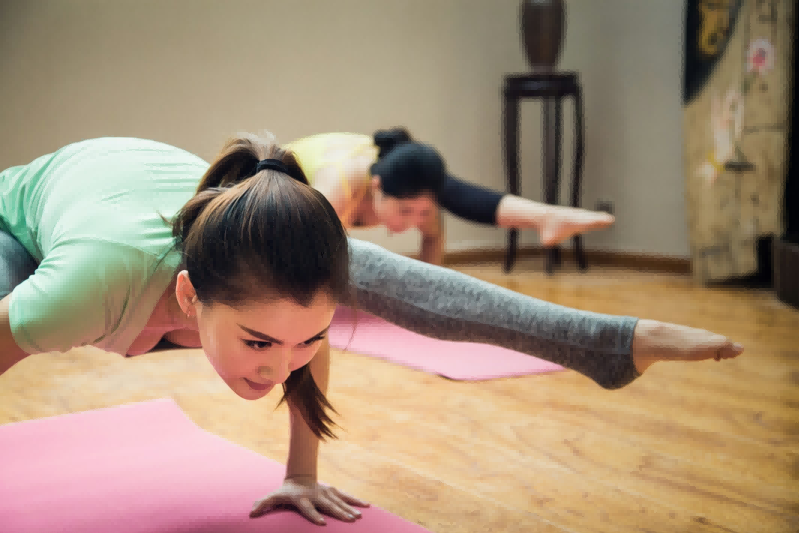
How do cleaning and drying methods affect yoga mats?
The coach may really like a certain sample, but the staff who take care of dozens of mats every day may easily notice the troubles in actual use.
The classes in the yoga studio may be tightly scheduled, leaving less time for the cleaning staff than the instructor imagines. Before formal wiping, check the commonly used cleaning agents and product maintenance instructions in the museum, then clean according to normal procedures and retest the samples. If the surface feel changes or the edges curl up, records should be kept. However, just one week is still not enough to assess long-term wear and tear.
Yoga Studio Sample Test Record Form
When trying out, instead of writing ‘useful’ in a vague way, it’s better to record what actually happened. ‘Easy to use’ may be when the palm does not slip on a dry surface, or when the mat does not move on the floor, or when it feels comfortable kneeling. The next sample may be better in one aspect, but lacking in another. Concise and specific records are necessary to help the team make comparisons.
| Time point for testing | What needs to be recorded? | What can it help determine?
|
| At the start of practice
|
Ground conditions, and whether the entire mat shifts | Anti-slip performance of the mat base on that floor surface
|
| Midway through the session
|
Whether hands and feet slip after skin perspiration | Anti-slip performance of the mat front surface
|
| After cleaning
|
Cleaning agent used, any change in texture, and whether edges curl up | Material compatibility and early wear |
| Before the next class
|
Whether the mat is dry, and where it was placed for drying | Ability to adapt to the venue’s class scheduling rhythm
|
| During storage
|
Whether damp mats can be laid flat or must be rolled up | Whether the venue has adequate space for drying
|
| At the next use
|
Surface texture of the mat after routine cleaning | Whether the sample remains usable normally
|
| After several sessions
|
Visible changes to edges or surface compared with unused samples | Visible changes to edges or surface compared with unused samples |
| Before approval for bulk purchase
|
Exact name of the cleaning agent and any unresolved compatibility issues |
Whether additional materials need to be tested
|
Between two classes, the cleaning staff may only have a short preparation time. If the trial mat is not yet dry and needs a place to hang it when the next class starts, even if everyone likes it in the first class, this is still an important test result. In addition, product maintenance recommendations do not equate to venue hygiene standards: whether the disinfection process meets the standards should be confirmed separately.
How to choose the appropriate thickness and size
Taking PROESCE LKEM-3214 as an example, the product page labeling uses suede surface and natural rubber bottom layer, with a length of 183cm and a width of 61cm, providing thickness options of 2-5mm.
A certain thickness should be selected for trial use and clearly marked on the order. The same mat may provide vastly different sensations when supporting the knee in a kneeling position and balancing on one foot; In addition to thickness, the softness and hardness are also worth paying attention to.
61cm is only the width of the mat and does not represent the space required for the practitioner’s activities. Spread out a few mats on the classroom floor and try walking through the middle. The fact that 50 mats can be placed on the floor plan does not mean that there is still enough space for 50 people to practice.
What needs to be confirmed before bulk procurement?
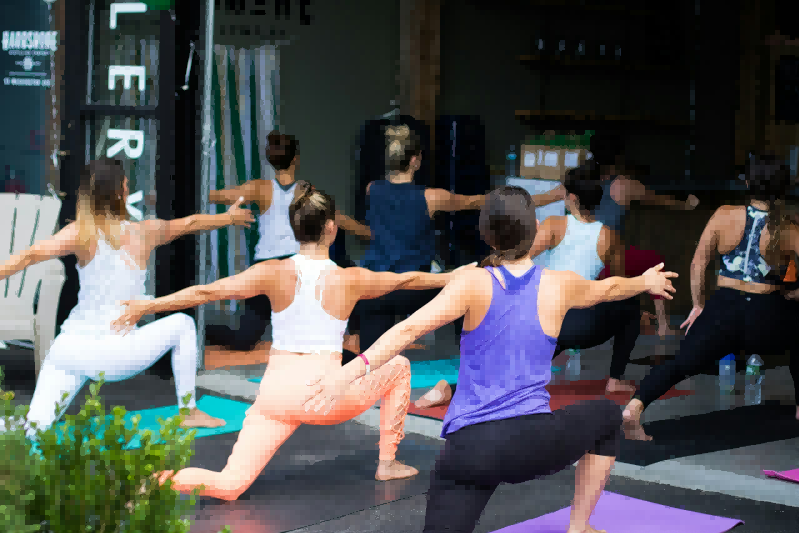
Confirmed printed patterns are usually easy to identify, but when reordering, thickness and material structure are more easily overlooked. If the first test is the 4mm version, and the later received goods are the same in other aspects, as long as the thickness is different, it is not the version that the coach originally tried. The range of 2-5 millimeters provided by the supplier is only an optional specification and cannot replace the thickness requirements specified in the order.
| Check Items
|
When confirming the order
|
When confirming the order After goods arrival
|
| Material structure layer
|
Suede top layer + natural rubber base | Compare with retained samples |
| أبعاد | 183 x 61cm | Measure actual dimensions of delivered mats |
| سماكة | Select one definite value from 2–5 mm | Verify the thickness marked on the product
|
| Printing & care instructions
|
Confirmed design artwork and care guidelines | Check patterns and instructions on samples inside packaging |
| Cushioning & foot feel | Reserve samples for knee support and balance tests | Compare delivered products on the same floor surface
|
| Classroom layout | Confirm quantity of mats and walking space | Lay out delivered mats on-site before class
|
| Subsequent restocking | Record model number and thickness in purchasing records | Do not rely solely on printed patterns for identification
|
These records do not need to be written into a lengthy report, but they must enable the person responsible for receiving the goods to answer a simple question: Is the cushion in the box the one actually tested by the coach and cleaning staff? Just by looking at the packaging pattern being the same, it is not certain.
The inspection plan for the selected SKU (specific product specifications) should also be requested from the supplier. The inspection process introduced by PROESCE includes incoming material inspection, production process inspection, finished product inspection, and pre shipment inspection; The finished product can undergo 100% full inspection or AQL sampling inspection according to the plan. The order process also includes sample confirmation, trial production, and shipment. The minimum order quantity (MOQ) varies depending on product specifications, materials, processes, customization requirements, and packaging
Before finalizing the design, confirm the cleaning and maintenance requirements for the materials
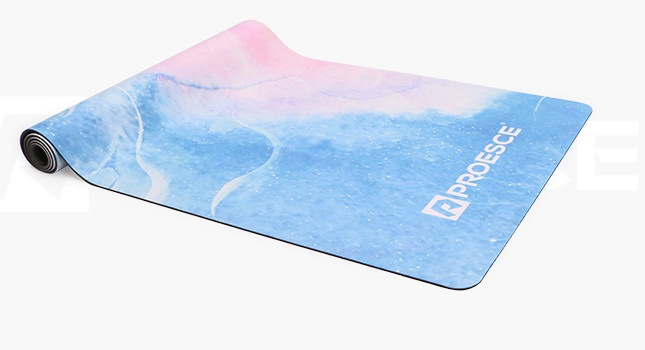
LKEM-3214 recommends using a damp cloth and neutral cleaner for wiping, and should not be soaked, machine washed, or exposed to direct sunlight. Oil and sharp objects should also be avoided from coming into contact with the suede surface. According to the product page, the suede surface will have better anti slip effect when exposed to sweat. Yoga studios should arrange for employees to verify this statement through regular courses before approving bulk purchases.
These restrictions are not only related to cleaning work. If essential oils or accessories with hard edges are used in the course, the coach should understand the maintenance instructions in advance and determine whether they are suitable for placement on the mat. Even if the window edge looks very suitable for drying, direct sunlight may not meet the usage requirements. Therefore, during procurement, it is not enough for only the personnel responsible for confirming the printing to make the decision, and the actual teaching team should also participate in the discussion.
How to customize yoga mats for yoga studios
انطلق للأمام provides customized solutions for brand identity, color, material, surface texture, labeling, and packaging. Standard molds may limit size adjustments, so it is necessary to confirm in advance which customization content the selected style supports. The brand also offers private-label yoga sets and can assist with product matching and color matching. The final version used for classroom testing and batch procurement confirmation should be the finalized version.
Frequently Asked Questions
Q: Do all courses require the use of the same yoga mat?
If a mat is suitable for all courses, of course it can be used uniformly; If different courses or classrooms have different needs, it is also reasonable to choose them separately. The key is to record the model and maintenance method, making it easy for employees to distinguish.
Q: Can I directly use the disinfectant used in the yoga studio’s daily routine?
It is necessary to confirm whether the specific disinfectant is compatible with the specific mat material, and to separately verify the hygiene and disinfection process of the venue. Not damaging the material does not mean that the disinfection requirements have been met.
Q: How to make the sample trial more valuable as a reference?
The key is to clearly record the process, including course type, floor material, product model, thickness, cleaning method, and drying time. Just saying ‘this mat is good’ does not help you compare the next product.
Q: What should be confirmed before bulk purchasing at a yoga studio?
Verify the selected thickness, material structure, maintenance instructions, and printing design one by one based on the confirmed samples.
Q: Do custom yoga mats also need to be tested before placing large orders?
need. If the customized version changes the surface or material, it should be used for classroom trials and cleaning tests.
Are you planning to purchase yoga mats for the yoga studio?
Welcome to learn about PROESCE’s yoga mat products and contact PROESCE to explain your sample testing requirements and expected purchase quantity.
منشور حديث


المنتجات ذات الصلة
المنتجات الأكثر مبيعاً
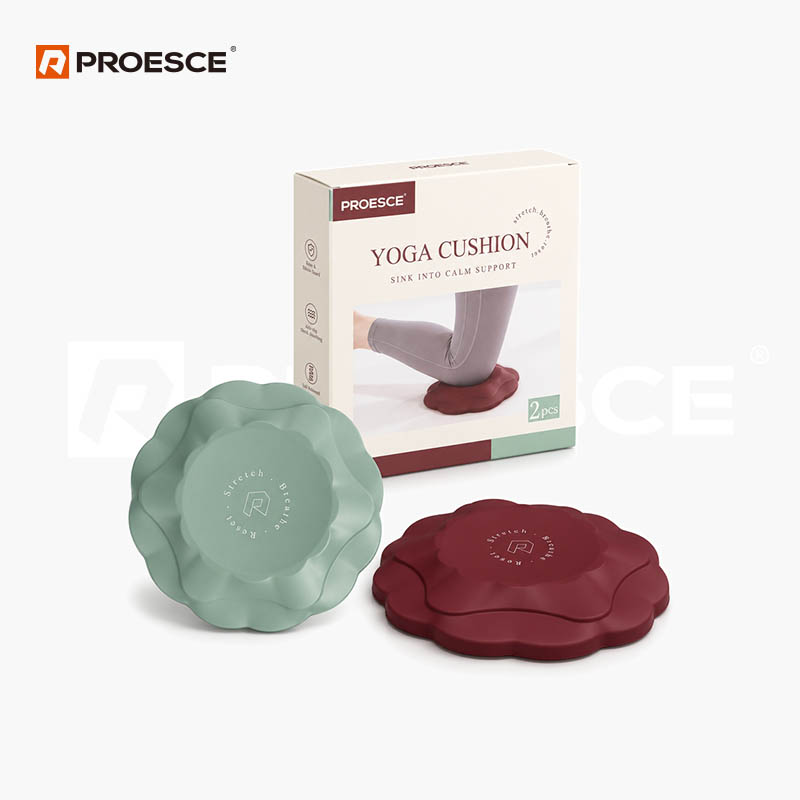
Flower Shaped High-Density PU Yoga Cushion & Knee Support Pad – PROESCE LKEM-5350
The PROESCE LKEM-5350 is a specialized flower-shaped PU yoga cushion engineered to eliminate acute joint pressure during floor poses, kneeling stretches, and core planks. Molded from high-density, self-skinning polyurethane foam with a 20mm profile, it features an ergonomic center concave cradle that stabilizes the patella and disperses body weight away from vulnerable knee caps, wrist bones, and elbows. Unlike flimsy foam towels or rigid EVA blocks, its micro-cellular structure delivers responsive shock absorption with immediate rebound. Measuring 20cm across and weighing just 140g, it sits seamlessly atop standard yoga mats or hard floors. Available in designer Burgundy and Sage Green with stamped center motto ‘Stretch · Breathe · Reset’, with complete custom branding and retail packaging for overseas B2B brands.
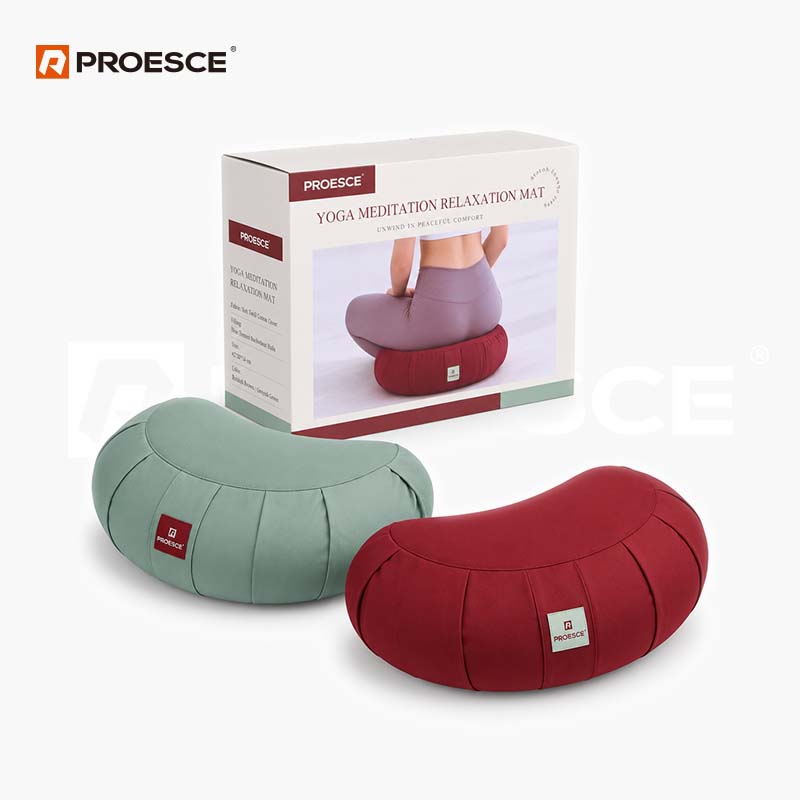
Ergonomic Crescent Yoga Meditation Cushion Zafu Pillow with Buckwheat Hulls – PROESCE LKEM-2050
The PROESCE LKEM-2050 is an ergonomic crescent yoga meditation cushion (Zafu pillow) engineered to provide optimal pelvic tilt, spinal decompression, and joint comfort during cross-legged seating and breathwork. Tailored with a traditional curved half-moon contour and classic side pleats, it naturally cradles the hips while allowing heels to tuck closely into the groin without ankle numbness. Filled with 100% natural, triple-cleaned organic buckwheat hulls inside a zippered inner lining, users can easily adjust firmness and height. The premium cotton canvas outer cover features an integrated side carry handle with a woven PROESCE label and a concealed floor-safe zipper for machine washing. Available in designer Burgundy Wine and Sage Green, it serves as a high-margin staple for yoga studios, wellness spas, and Amazon FBA retailers.
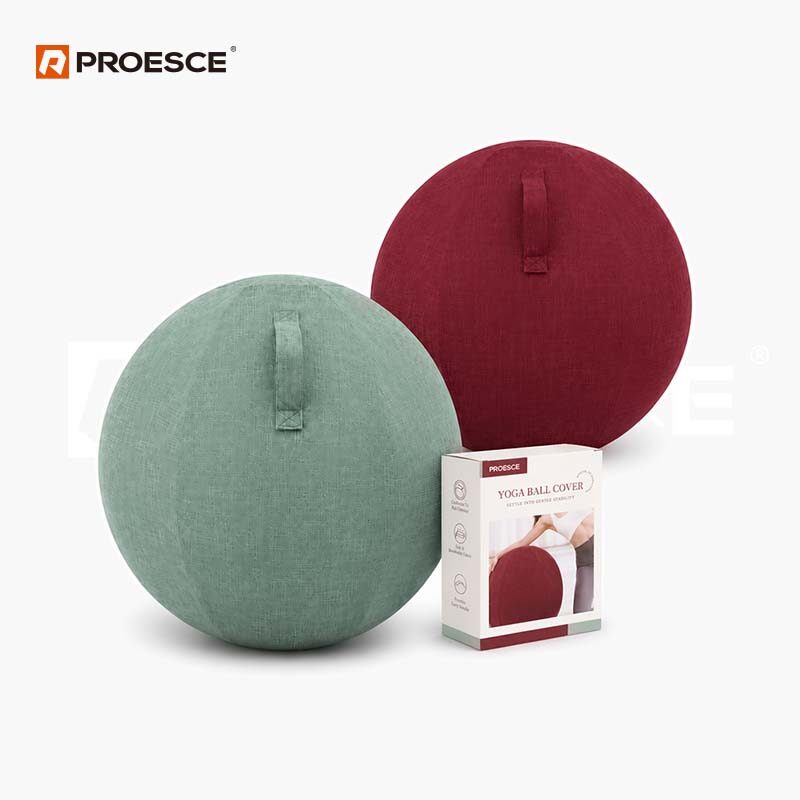
Natural Breathable Linen Fabric Gym Ball Cover Sitting Ball Chair Slipcover with Handle – PROESCE LGB-1615
The PROESCE LGB-1615 is a premium natural linen gym ball cover tailored to convert standard PVC exercise balls into breathable, minimalist sitting ball chairs. Made from heavy-weight, cross-weave natural linen blend fabric, it delivers superior moisture-wicking and air permeability, keeping users cool and sweat-free during long workdays. A reinforced vertical carry handle allows effortless one-handed portability between desks, conference rooms, and home studios. Sized perfectly for 55cm, 65cm, and 75cm anti-burst yoga balls, it features a heavy-duty hidden bottom zipper with a protective fabric welt to safeguard delicate flooring. Available in organic Sage Green, Deep Burgundy, and Natural Flax tones with custom woven brand labels, this machine-washable slipcover prevents PVC punctures while providing high retail margins for ergonomic office brands.
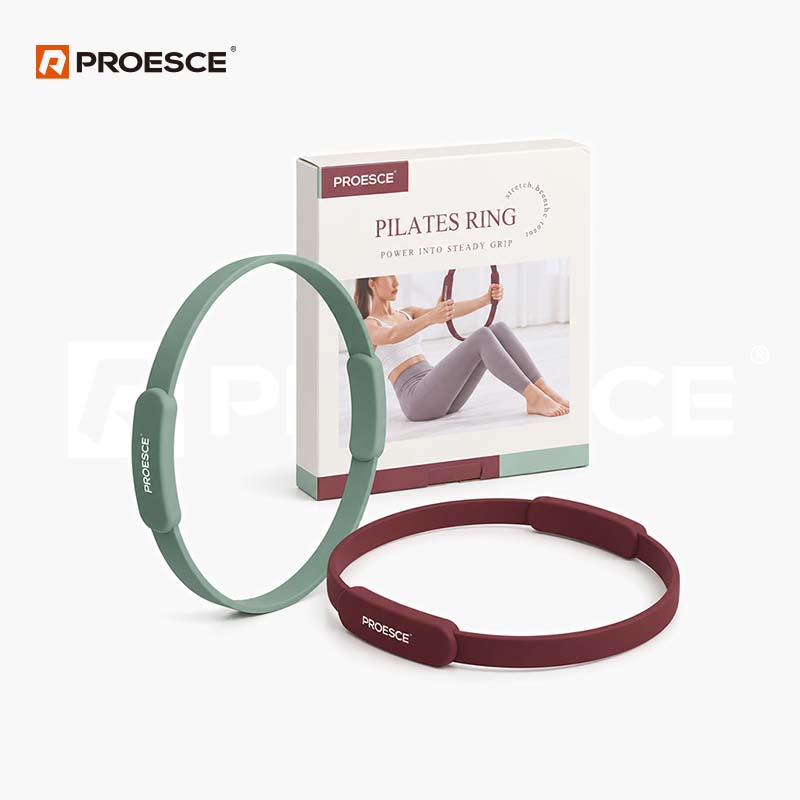
Pilates Resistance Ring Dual Grip Toning Fitness Magic Circle – PROESCE LEP-6629
The PROESCE LEP-6629 is a professional Pilates resistance ring engineered for targeted muscle activation, core stabilization, and full-body toning. Built with a high-resilience spring core and coated in soft, skin-friendly silicone, this ergonomic fitness resistance ring features dual contoured side handles for secure gripping between hands, thighs, or ankles. Offering steady 15-25 lbs resistance, it serves as an essential addition to any pilates set, yoga routine, physical therapy regimen, or home gym workout. Compact at 38cm in diameter and weighing only 480g, it replaces bulky exercise equipment while delivering consistent tension for glute shaping, inner thigh firming, and upper-body sculpting. Available complete OEM private label and custom Pantone matching.
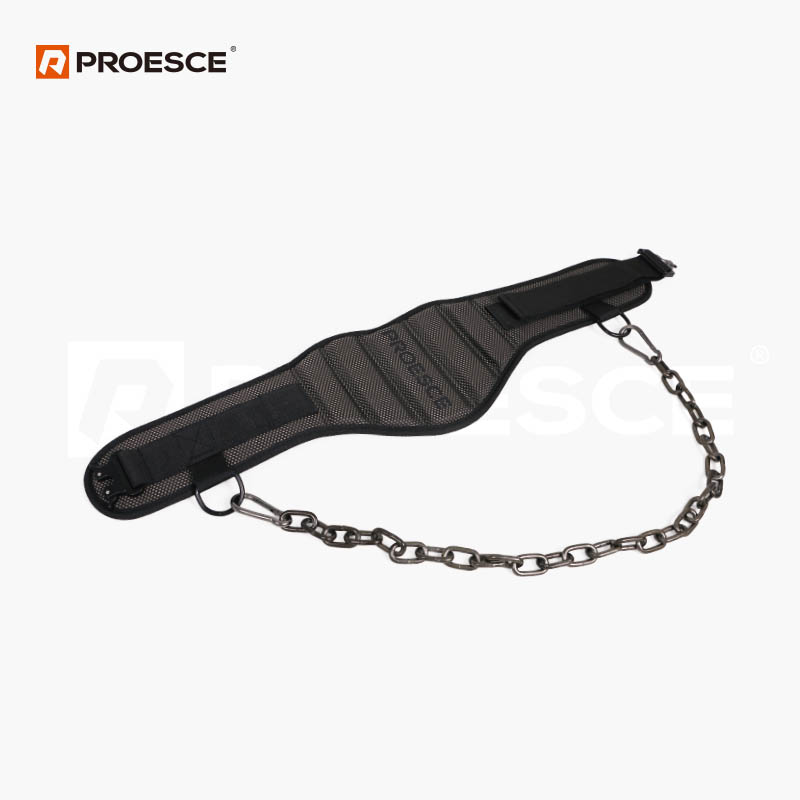
Dip Belt with Chain Weight Lifting Dip Belt – PROESCE LPG-1019
The LPG-1019 dip belt is made of EVA and polyester, size 80x20cm, black mesh EVA belt with steel chain and carabiner. 1pc/polybag, 10pcs/carton, carton 120x28x20cm, N.W.11kg/G.W.12kg. For adding weight to dips, pull ups and hanging leg raises. Custom color and logo supported. A weight equipment for home gym add-on.